“Undetected” means a provider currently reports that a particular Destiny 2 cheat build is not known to be flagged by the game’s anti-cheat.
It is a status claim at a point in time, not a promise that Bungie cannot identify use, that an account is safe, or that the label will remain true after an update.
If you see the word on a product page, the useful questions are which build it covers, when the status was checked, and how the provider handles reports of trouble.
Table of contents
What does “undetected” actually describe?
The label refers to a specific build. It does not mean Bungie has certified that build, tested it for safety, or permitted its use.
A page can continue to say “undetected” after the game, anti-cheat, or product changes unless somebody updates that page.
Our Destiny 2 cheat overview uses a current status label, while the Destiny 2 PC page explicitly says that no cheat can guarantee zero detection risk.
Treat both statements together: the displayed status is our current claim about the build, and it is subject to change.
A useful distinction is working, undetected, and allowed. A feature can work in-game without proving its detection status. A product can be described as undetected without being allowed under Bungie’s rules.
| Label | What it can tell you | What it cannot prove |
|---|---|---|
| Working | The provider says the feature functions on a build | That Bungie permits it or will not act |
| Undetected | The provider reports no known detection of that build | That future detection or a ban is impossible |
| Updating or testing | The provider has not marked that build ready for use | That every account or other product is affected |
| Allowed | Bungie’s rules permit the specific conduct | That a seller’s status label establishes permission |
Providers use status terms differently. The build, check time, and provider’s definition matter more than the badge alone.
Why an undetected label cannot guarantee no ban
Bungie says BattlEye protects Destiny 2 with dynamic detection while the game runs.
Bungie’s account restriction and banning policy also covers external programs that modify or analyze the game, including cheats and aimbots, as well as devices that automate play.
A provider cannot see every signal Bungie uses or certify that a future enforcement decision will not happen.
Bungie’s policy describes staff review of possible violations, while its BattlEye guide says automatic bans were enabled after the initial soft launch. Its policy also says player reports and Bungie’s own tools inform investigations.
An “undetected” label is therefore too narrow to answer the larger question, “Can I still be banned?” The answer is yes, and our ban waves guide covers documented cases.
The consequences depend on the action Bungie takes. Its policy distinguishes temporary restrictions from permanent account and device bans; a device ban prevents accounts from playing Destiny activities on the banned hardware.
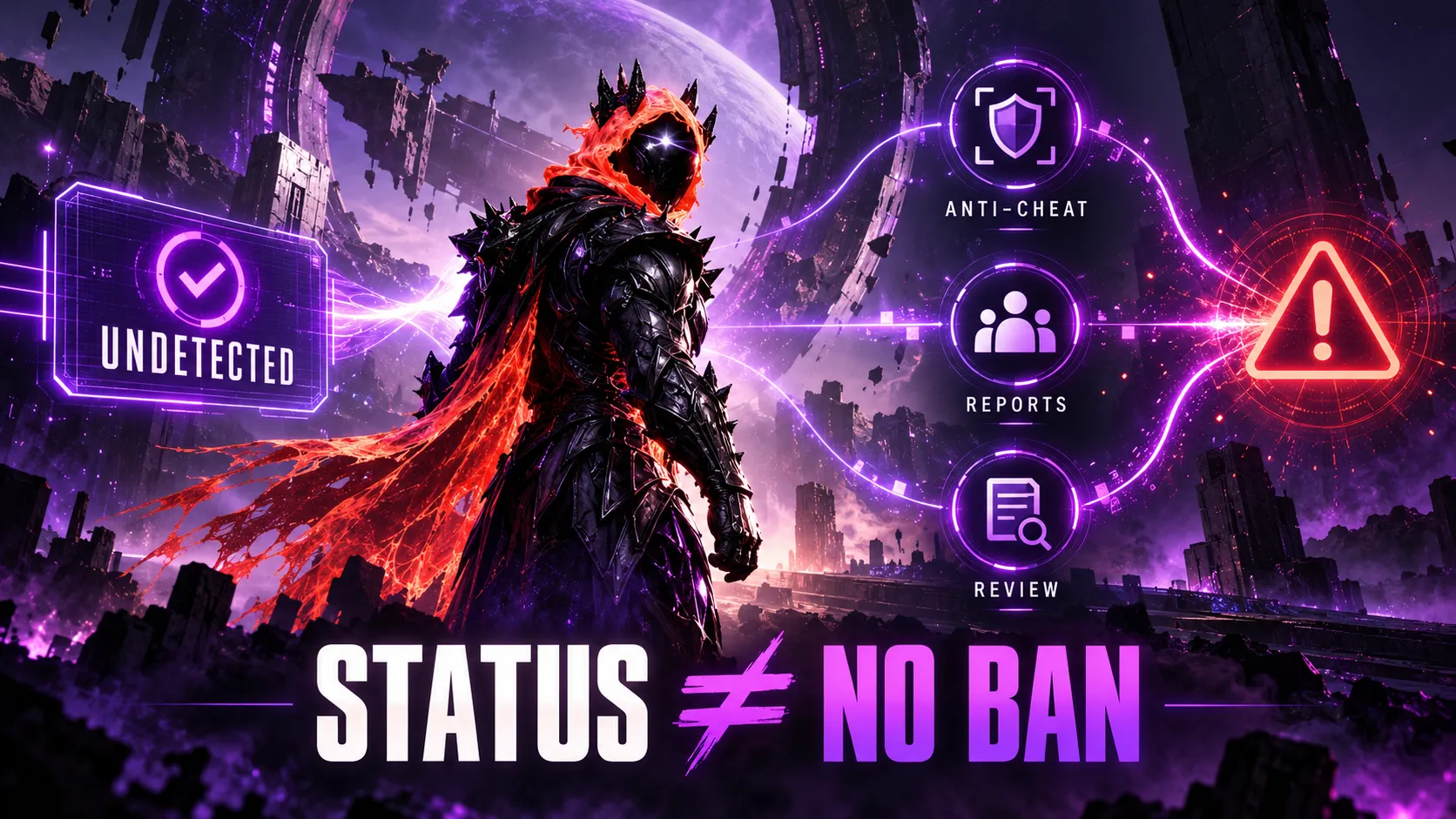
Read the actual notice if one appears, rather than assuming that every enforcement action has the same scope.
What can change the status?
A Destiny 2 build can change. BattlEye or Bungie’s detection methods can change. Bungie can also address a specific abuse through game-side changes.
In Update 9.7.0.5 on October 7, 2026, Bungie said it changed back-end code to address cheats that could spam other players with unearned rewards and XP, and that accounts using those cheats maliciously were being actioned.
That is a documented example of an enforcement-related change, not proof that every Destiny 2 cheat became detectable that day.
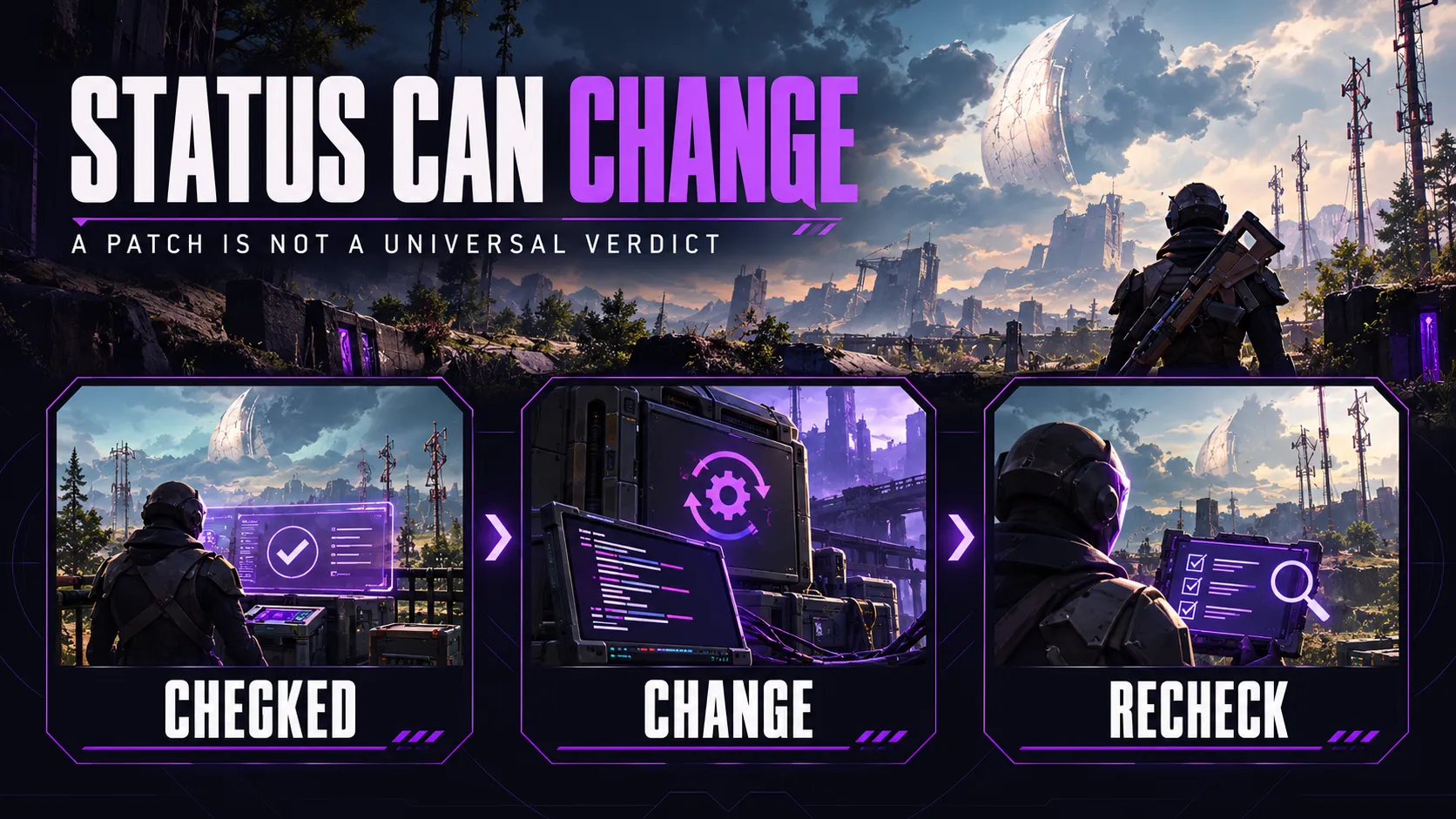
A new game patch does not automatically mean every product is detected. Bungie’s October 20 Update 9.7.0.6 addressed an Eververse issue.
The practical point is to look for product-specific, dated information after a relevant change rather than infer a universal status from a patch number alone.
The same caution applies to a status screenshot, a short gameplay clip, or an old customer review. Each shows only what was visible at the time.
None independently verifies the current build against every way Bungie may enforce its rules.
Does “undetected” apply to every feature and platform?
One status label does not prove that each feature, device, or setup has been separately tested.
Our Destiny 2 aimbot features and ESP and Wallhack features describe what the current package advertises; those feature descriptions are not independent security tests.
Ask which current build and platform the reported status actually covers.
The distinction matters for console claims, too. A page listing PS5 or Xbox support does not establish that BattlEye on Windows tests a console setup in the same way.
The label should be read alongside the platform’s setup requirements, not as a single universal technical guarantee.
“Streamproof” is a separate claim. Streamproof describes whether an overlay appears in certain capture methods.
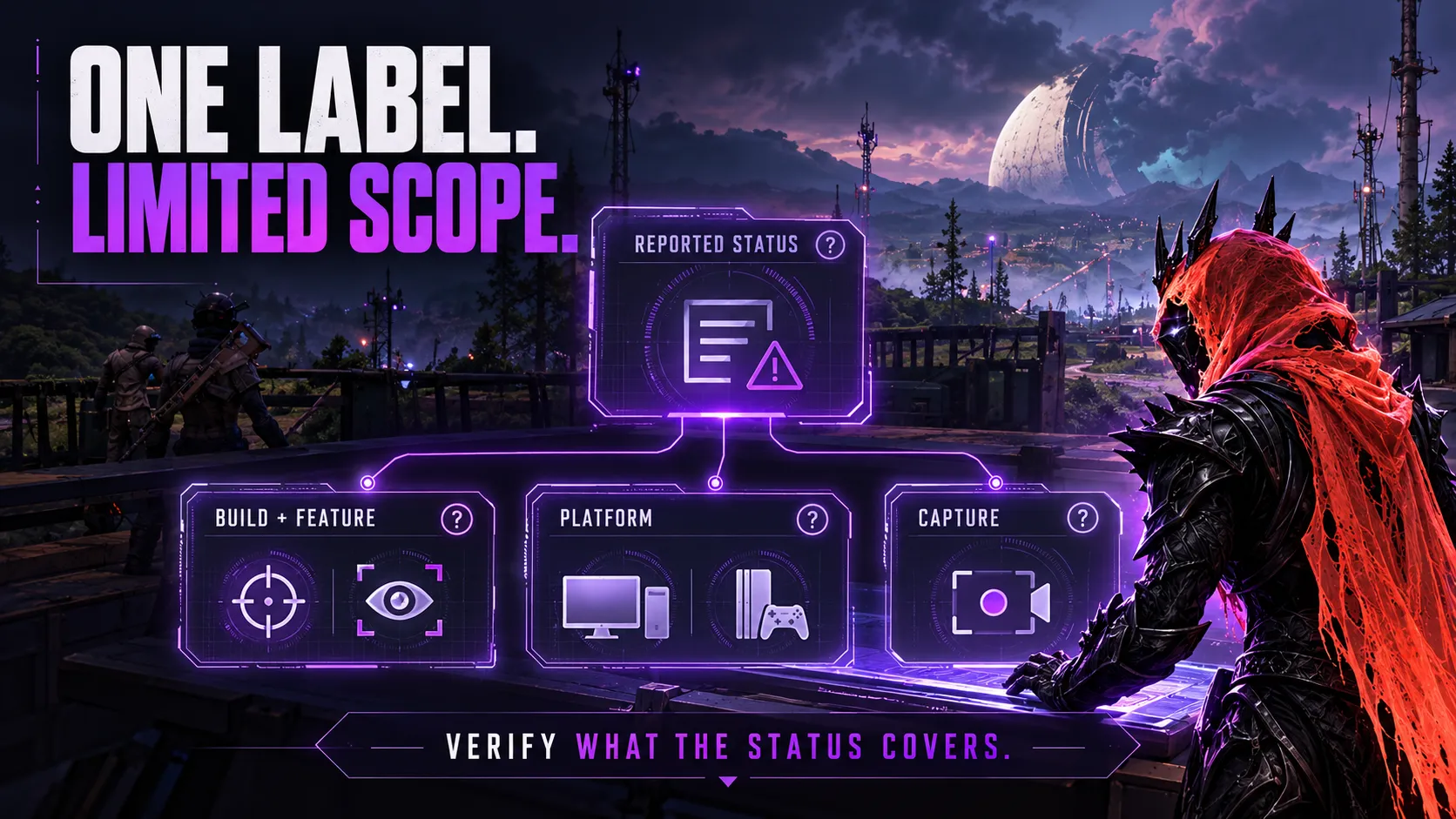
Bungie’s PC application compatibility guide discusses capture and overlay compatibility separately from its ban policy.
Likewise, a HWID spoofer does not erase an account ban or make a cheat undetectable.
Five questions to ask before trusting a status claim
- Which build? A generic “undetected” badge is less useful than a status tied to the version actually supplied.
- Checked when? Look for a timestamp and whether it follows a relevant game or product change.
- What does the check cover? Confirm the platform and product, without assuming every advertised feature has the same evidence behind it.
- What happens if reports arrive? A credible status process should explain when use is paused, what is investigated, and when an updated build is released.
- What is being promised? “No bans,” “100% safe,” and “never detected” go beyond what a current status check can establish.
If you are evaluating our Destiny 2 free trial, use the same questions before downloading.
A trial can help assess the setup and features; it cannot prove that an account will avoid later enforcement.
Key takeaways
- “Undetected” is a provider’s current assessment of a particular build, not Bungie approval.
- A working feature, a status label, and permission under Bungie’s rules are three different things.
- Bungie can enforce its rules through anti-cheat detection and review of reported behavior.
- Check the build, platform, timestamp, and response to reports before relying on a status claim.
- No trial, spoofer, or streamproof setting guarantees that an account will avoid a ban.
Frequently asked questions
Is an undetected Destiny 2 cheat safe?
No status label can establish zero ban risk. It describes what the provider currently reports about a build, while Bungie controls enforcement.
Does “undetected” mean BattlEye is turned off?
No. Bungie says BattlEye is active while Destiny 2 runs on a player’s computer. The label does not imply the anti-cheat has been disabled.
Can Bungie ban someone later if the cheat worked today?
Yes. A successful session is not evidence that Bungie cannot later apply an account or device action. Bungie’s policy describes both kinds of bans.
Is “undetected” the same as “undetectable”?
No. “Undetected” is a reported current state. “Undetectable” suggests that detection is impossible, which a provider cannot guarantee.
Does a private cheat guarantee it stays undetected?
No. Limited distribution may be part of a provider’s description, but it does not establish what Bungie knows or what will happen after an update or report.
Are PvE cheats exempt from Destiny 2 bans?
No. Bungie’s ban policy says it evaluates all gameplay for violations and notes that benefits from PvE cheating can spill into PvP.
Does a HWID spoofer make a cheat undetected?
No. Spoofing hardware identifiers and assessing a cheat build’s detection status are different claims. Bungie can issue account or device bans, and spoofing does not remove an existing account action.
Does streamproof mean BattlEye cannot see the cheat?
No. Streamproof refers to whether an overlay appears in certain captures, not an anti-cheat certification. Capture compatibility and enforcement are separate issues.
Does a free trial prove a cheat is ban-free?
No. A short trial can show whether features run on a particular setup, but it cannot establish how Bungie will evaluate the account later.